California Rent Increase Rules and Deposit Limits, Explained
The statewide cap on rent increases in Orange County is 8.7 percent for increases taking effect on or after 1 August 2026, under Civil Code 1947.12. Security deposits are capped at one month's rent under Civil Code 1950.5. Here is how both work, and which date decides whether they apply.
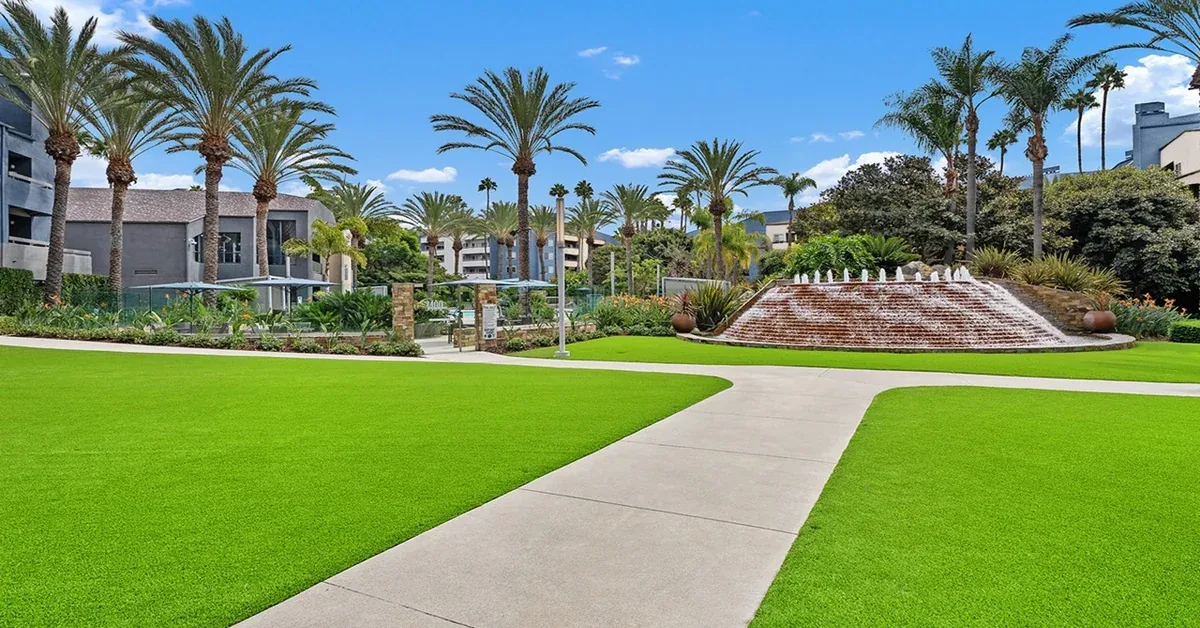
For a rent increase taking effect in Orange County on or after 1 August 2026, the statewide cap is 8.7 percent: 5 percent plus a published inflation figure, fixed by Civil Code 1947.12 and binding only on the buildings the statute covers. Here is the formula, the date that decides whether yours is inside it, and what Civil Code 1950.5 lets a landlord keep from your deposit.
The number that caps a rent increase in Orange County now
Civil Code 1947.12(a)(1) sets the formula. Over any 12-month period an owner cannot raise the gross rental rate by more than 5 percent plus the percentage change in the cost of living, or 10 percent, whichever is lower. The percentage runs off the lowest gross rental rate charged for that home at any point in the 12 months before the increase takes effect, not the rent you pay this month.
The inflation figure is a named index. Civil Code 1947.12(g)(1)(A)(i) directs that for property in Orange County the number comes from the Consumer Price Index for All Urban Consumers for All Items for the Los Angeles-Long Beach-Anaheim metropolitan area, which the statute states covers the Counties of Los Angeles and Orange.
The measurement window moves on 1 August. Under Civil Code 1947.12(g)(3)(B)(ii), for increases effective on or after 1 August the change is measured between April of that year and April of the year before. Before 1 August, subparagraph (B)(i) uses April of the preceding year against April of the year before that. Subparagraph (B)(iii) requires rounding to the nearest one-tenth of 1 percent.
Run it for 2026 and you get 8.7 percent. The Bureau of Labor Statistics index for the Los Angeles-Long Beach-Anaheim area read 342.565 in April 2025 and 355.166 in April 2026, a change of 3.6784 percent, rounded to 3.7. Five plus 3.7 is 8.7, lower than 10. Increases effective between 1 January and 31 July 2026 were capped at 8.0 percent, because April 2024 to April 2025 was a 3.0 percent change.
Two increases are allowed, not one. Civil Code 1947.12(a)(2) permits no more than two increments in a 12-month period where the same tenant stays in occupancy, and both must fit inside the annual cap. Under subdivision (b), an owner sets the opening rent of a new tenancy freely.
What 8.7 percent is in dollars here
The live feed for 3400 Avenue of the Arts showed 10 homes across 5 floor plans on 13 October 2026. Seven were one-bedroom homes between $2,959 and $3,801 at 750 to 875 square feet. Three were two-bedroom homes between $3,682 and $3,750, all at 1,220 square feet.
On a round $3,000 rent, 8.7 percent is $261 a month. The new rent would be $3,261, costing $3,132 over a year. A flat 10 percent would have been $300, so the inflation arm is worth $39 a month. At the bottom of the one-bedroom band the maximum increase is $257.43; at the top, $330.69. On the two-bedroom band, $320.33 and $326.25.
A concession does not lower the base. Civil Code 1947.12(a)(1) excludes discounts, concessions and credits from the lowest gross rental amount, and requires the gross rate and any concession to be listed separately in the lease. A lease showing $3,200 gross with two months free is capped next year off $3,200. Current availability is on the 3400 Avenue of the Arts community page.
The one date that decides whether the cap covers your building
Civil Code 1947.12(d)(4) exempts housing issued a certificate of occupancy within the previous 15 years. That line decides more cases than anything else in the statute, and it is a rolling test: the 15 years run back from whenever the question is asked, so a building exempt this year becomes covered the day it passes its fifteenth anniversary.
It is the certificate of occupancy date, not the year built. Those are different dates, often years apart, and a listing field or tax record is not evidence of it. Civil Code 1946.2(e)(7) applies the identical test to just cause, so the same date decides whether you can be asked to leave without a reason.
This guide does not state whether 3400 Avenue of the Arts is covered, because that date cannot be verified from a primary source here. Ask the leasing office for it in writing. Inside 15 years there is no statutory ceiling at all and only the notice period applies; outside 15 years, 8.7 percent is the ceiling.
There is a free second check. Civil Code 1946.2(f)(3) requires owners of covered property to give tenants a notice, in no smaller than 12-point type, in the lease or as an addendum, beginning: "California law limits the amount your rent can be increased." Read your lease for that paragraph.
The other exemptions are narrow. Civil Code 1947.12(d)(5) exempts a separately alienable house or condominium, but only where the owner is not a corporation, a real estate investment trust or a limited liability company with a corporate member, and only where the tenant was given written notice in the exact statutory wording. Deed-restricted affordable housing, dormitories and owner-occupied duplexes are also out.
How much warning you are owed before the rent changes
Civil Code 827(b) sets notice by size. Where the increase is 10 percent or less of the rent charged at any time in the 12 months before the effective date, alone or combined with other increases in that period, subdivision (b)(2) requires at least 30 days' notice. Above 10 percent, subdivision (b)(3)(A) requires at least 90 days.
The lookback is cumulative, so one large increase cannot be split into two notices to dodge the 90-day rule. In a covered building the 8.7 percent maximum sits below the 10 percent line, so 30 days is the norm; the 90-day rule matters most in exempt buildings, where nothing caps the amount.
When a tenancy can be ended, and what a no-fault ending costs
Civil Code 1946.2(a) requires just cause after 12 months of continuous and lawful occupancy, and the cause must be stated in the written termination notice. Where adult tenants were added later, the protection applies once all have 12 months or one has 24.
At-fault just cause is a closed list. Civil Code 1946.2(b)(1) runs from non-payment of rent and material lease breach through nuisance, waste, criminal activity and unlawful subletting. Under subdivision (c), a curable violation requires a cure notice first.
No-fault just cause is shorter. Civil Code 1946.2(b)(2) allows occupation by the owner or a close relative for at least 12 continuous months as a primary residence, withdrawal from the rental market, compliance with a government or court order, and demolition or substantial remodel. Subparagraph (D)(ii) defines substantial remodel tightly: permitted structural or systems work, or hazardous material abatement, requiring you to vacate for at least 30 consecutive days. Painting and minor repairs do not qualify.
A no-fault ending triggers a payment, whatever your income. Civil Code 1946.2(d)(1) gives the owner a choice between a direct relocation payment and a written waiver of the final month's rent before it falls due. Subdivision (d)(3)(A) fixes the amount at one month of the rent in effect when the notice issued, paid within 15 calendar days of service. On a $3,000 rent that is $3,000; on the two-bedroom band, $3,682 to $3,750. Subdivision (d)(4) voids the notice if the owner does not comply strictly.
Your deposit is capped at one month's rent, furnished or not
Civil Code 1950.5(c)(1) is the rule. A landlord may not demand or receive security, however denominated, above one month's rent, on top of the first month's rent paid on or before initial occupancy. There is no higher ceiling for furnished homes. Subdivision (c)(6) sets the start date: the cap does not apply to security collected or demanded before 1 July 2024.
Subdivision (b) makes it hard to work around. Security means any payment, fee, deposit or charge imposed at the start of the tenancy, so renaming part of it a move-in fee does not escape the cap, and subdivision (n) bars calling any security nonrefundable. Against the 13 October 2026 bands, the maximum lawful deposit is $2,959 to $3,801 on a one-bedroom and $3,682 to $3,750 on a two-bedroom.
One exception exists and it is narrow. Civil Code 1950.5(c)(5)(A) permits two months' rent where the landlord is a natural person, or an LLC whose members are all natural persons, owning no more than two rental properties with no more than four units in total. Subparagraph (B) removes even that where the tenant is a service member.
Twenty-one days, photographs and receipts
Civil Code 1950.5(h)(1) sets the deadline. No later than 21 calendar days after you vacate, the landlord must furnish an itemised statement showing the basis for and amount of any security received and its disposition, and return the balance. If you paid electronically, subdivision (h)(1)(A)(ii)(I) requires it back electronically to an account you designate in writing.
You are owed the paperwork, not just a total. Civil Code 1950.5(h)(2) requires the documents behind each deduction: time spent and hourly rate where the landlord's own staff did the work, the bill or invoice where anyone else did. Subdivision (h)(3) permits a good faith estimate where work is unfinished, with the accounting completed within 14 calendar days.
Photographs are now evidence, and the dates are in the statute. Civil Code 1950.5(g)(2) provides that from 1 April 2025 the landlord must photograph the home after possession is returned and before any repair or cleaning for which a deduction will be claimed, and again once that work is finished. Subdivision (g)(1) adds that for tenancies beginning on or after 1 July 2025 the landlord must also photograph it at the start, and subdivision (h)(2)(D) requires those photographs to reach you with the deduction.
What cannot be charged matters as much. Civil Code 1950.5(e)(2)(A) bars any claim for pre-existing damage, for ordinary wear and tear or its effects whenever it arose, or for its cumulative effects across tenancies. Subparagraph (C) bars charging for professional carpet or other professional cleaning unless reasonably necessary to restore the original condition.
Ask for the inspection, and know the penalty. Civil Code 1950.5(f)(1) requires the landlord to tell you in writing that you may request an initial inspection and be present at it, so you learn what will be deducted while you can still fix it. Civil Code 1950.5(m) exposes a landlord who retains security in bad faith to statutory damages of up to twice the deposit plus actual damages.
Costa Mesa, Orange County and local ordinances
State law gives way to a local rent cap in one circumstance only. Civil Code 1947.12(d)(3) removes a property from the state cap where a public entity's valid exercise of its police power restricts annual increases to less than the state figure. A local ordinance no stricter than the state cap does not displace it.
Just cause works the other way round. Civil Code 1946.2(i)(1) provides that a local just cause ordinance adopted on or before 1 September 2019 applies instead of the state section, and a later one applies if it is more protective by three statutory tests. A property is never subject to both.
Costa Mesa has legislated here, and its subject is just cause. The California State Clearinghouse record for SCH number 2023120067, posted on 5 December 2023 with the City of Costa Mesa as lead agency, describes Urgency Ordinance No. 2023-04 as amending Title 9 of the Costa Mesa Municipal Code by adding Article 24, Just Cause Residential Tenant Protections. That governs the grounds for ending a tenancy, not the size of an increase. Municipal codes change by ordinance, so ask the City whether any rent stabilisation ordinance is in force today. Absent a stricter local cap, Civil Code 1947.12 is the ceiling.
What to do with this before you sign and before you leave
Get three answers in writing before you sign: the certificate of occupancy date, whether the Civil Code 1946.2(f)(3) notice is in the lease, and the gross rent as distinct from any concession. Read that figure against what renting in Costa Mesa costs, the current plan list and the renter's overview. On the way out, request the initial inspection, photograph every room, and give a forwarding address in writing. Live availability is on the community homepage.
What this article is. General information about California statutes, not legal advice, and not a statement about any individual lease or building. California housing law is amended most years, and Civil Code 1947.12 and 1946.2 are currently written to repeal themselves on 1 January 2030. Every provision above was read from the California Legislative Information text of the relevant code section on 13 October 2026, and the index figures from the Bureau of Labor Statistics the same day. For forms and free self-help use the Judicial Council of California centre at selfhelp.courts.ca.gov, and for the current cap percentage by area see the Attorney General's rent cap page at oag.ca.gov/rentcaps; for your own situation, see a lawyer.
3400 Avenue of the Arts is an AIR Communities property, and this guide is published by the community. Pricing, availability and fees were checked against the community's own published listings on 13 October 2026 and change frequently. Statutory text was read from California Legislative Information (Civil Code 827, 1946.2, 1947.12 and 1950.5), and the cap percentage, the notice periods and the deposit limit were separately confirmed against the California Attorney General's published guidance on rent caps and tenant rights. The Consumer Price Index figures come from US Bureau of Labor Statistics series CUURS49ASA0 and the Costa Mesa ordinance record from the California State Clearinghouse, all read on 13 October 2026. Confirm current terms with the leasing office before making a decision.
Frequently asked questions
What is the maximum rent increase allowed in Orange County in 2026?
Under Civil Code 1947.12, 8.7 percent for increases effective on or after 1 August 2026, being 5 percent plus a 3.7 percent CPI change. Increases effective earlier in 2026 were capped at 8.0 percent.
Which CPI does the California rent cap use?
Civil Code 1947.12(g)(1)(A)(i) specifies the CPI-U for All Items for the Los Angeles-Long Beach-Anaheim area, which the statute says covers Los Angeles and Orange counties.
How many times a year can my rent go up?
No more than twice. Civil Code 1947.12(a)(2) allows two increments in any 12-month period where the same tenant stays, and both must fit within the annual cap.
Does the rent cap apply to my building?
It turns on the certificate of occupancy date. Civil Code 1947.12(d)(4) exempts housing issued one within the previous 15 years, so ask the leasing office for the date.
How much notice must a landlord give before raising the rent?
Civil Code 827(b)(2) requires at least 30 days for an increase of 10 percent or less of the rent charged at any point in the previous 12 months, and Civil Code 827(b)(3)(A) requires 90 days above that.
How much can a landlord charge for a security deposit in California?
Civil Code 1950.5(c)(1) caps it at one month's rent on top of the first month's rent, furnished or unfurnished, for security collected or demanded on or after 1 July 2024.
How long does a landlord have to return my deposit?
Civil Code 1950.5(h)(1) gives 21 calendar days after you vacate for an itemised statement and the balance. Subdivision (h)(3) permits a good faith estimate if work is unfinished.
Can my landlord charge me for normal wear and tear?
No. Civil Code 1950.5(e)(2)(A) bars any claim against the tenant or the security for ordinary wear and tear or its effects, for pre-existing conditions, or for its cumulative effects across tenancies.
What is a no-fault eviction worth in relocation assistance?
Civil Code 1946.2(d)(3)(A) sets it at one month of the rent in effect when the notice issued, paid within 15 calendar days of service, or a written waiver of the final month's rent.
Does Costa Mesa have rent control?
Urgency Ordinance No. 2023-04, recorded with the California State Clearinghouse in December 2023, governs the grounds for ending a tenancy, not the size of an increase. Under Civil Code 1947.12(d)(3) the state cap is displaced only by a stricter local ordinance, so confirm the position with the City.